Military and Senior Discounts Available
Chimney Inspection
Chimney inspection services help property owners review the visible condition of chimneys, flues, venting components, and connections associated with fireplaces, boilers, furnaces, or other fuel-burning equipment. Proper venting is an important part of system operation, so changes in chimney condition should not be ignored.
Over time, chimneys and venting systems can develop visible deterioration, moisture-related damage, blockages, connection problems, or other conditions that may affect how connected equipment vents.
A chimney inspection can help identify concerns that should be evaluated further. The inspection may focus on the flue, visible chimney structure, venting path, system connections, and signs of deterioration.
Chimney safety inspection is especially relevant for properties that rely on fuel-burning heating systems. If the chimney or flue shows signs of damage, deterioration, or obstruction, additional attention may be needed before the connected equipment continues normal use.
Residential and commercial chimney inspection services can help property owners better understand the condition of the venting system. The goal is to identify visible concerns early and determine whether repair, cleaning, or further evaluation should be considered.
A chimney and its connected venting components work together to move combustion byproducts away from fuel-burning equipment. When part of that pathway develops a visible problem, it can affect how the overall system operates.
Chimney flue inspection focuses on the condition of the flue and venting route. Visible deterioration, blockages, damage, or connection problems may indicate that additional service is needed.
Connections between heating equipment and the chimney should also be reviewed. Loose, deteriorated, or visibly damaged connections can affect the path between the appliance and venting system.
A chimney inspector may also look for signs of moisture-related wear. Water intrusion can contribute to deterioration over time, particularly around exposed chimney materials or areas where water can enter.
Visible cracking, surface damage, staining, loose materials, or other changes may indicate that the chimney has developed a condition that deserves further attention.
Commercial chimney inspection can be important for properties where boiler, furnace, or other fuel-burning equipment relies on a shared or dedicated venting system. Residential inspection can serve a similar purpose for homes using fireplaces or heating equipment connected to a chimney.
The purpose of inspection is not to assume that every visible change is a major problem. It is to identify conditions that may affect the chimney, flue, or venting system and determine whether additional evaluation or repair should be considered.
From plumbing trouble to heating equipment concerns, talk with our team about the issue affecting your home or business.
Chimneys are exposed to changing temperatures, moisture, weather, and regular system use. These conditions can contribute to gradual deterioration that may not be obvious from inside the property.
Chimney inspection services can help identify visible signs of wear before they become more significant. Cracks, damaged materials, moisture staining, corrosion around connections, or other changes may indicate that part of the system needs attention.
Moisture-related deterioration can be especially important because repeated water exposure can affect masonry, metal components, and surrounding materials. Signs of moisture should be evaluated to determine whether they are connected to chimney condition.
Possible blockages are another concern. A flue or venting path should remain open enough to support proper operation of connected equipment. Visible obstructions or conditions suggesting restricted airflow may require additional service.
Chimney safety inspection may also help identify areas where deterioration has developed around the venting path or connection points.
Heating system chimney inspections can be useful when boiler or furnace performance changes and the venting system is one possible factor. While heating problems can have many causes, chimney condition may be part of the broader evaluation when fuel-burning equipment relies on the flue.
Commercial properties may have more complex venting arrangements, while residential properties may use a chimney for one or more heating or fireplace applications. In either setting, visible deterioration should not be ignored.
The goal is to identify potential chimney problems early enough for the property owner to determine the next appropriate step.
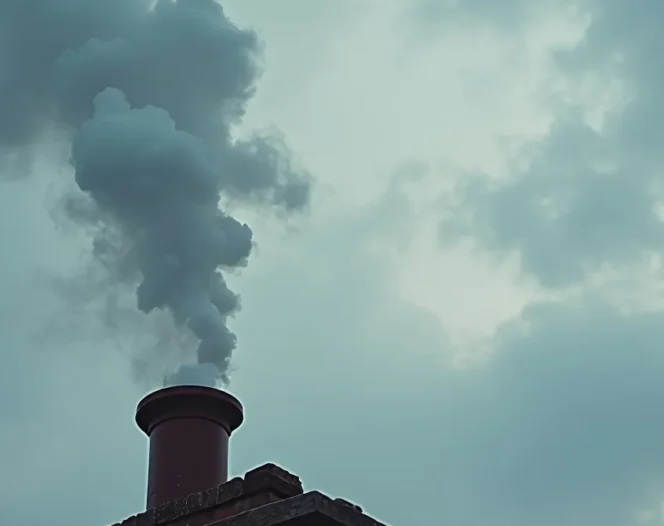
Boilers, furnaces, fireplaces, and other fuel-burning equipment may rely on chimneys or venting systems to move combustion byproducts away from occupied areas. The condition of the venting path is therefore an important part of overall system operation.
Chimney inspection service can help property owners understand whether visible components appear damaged, deteriorated, blocked, or poorly connected.
A heating system chimney inspection may be particularly useful when equipment is being serviced, when a venting concern is suspected, or when the chimney has not been reviewed for an extended period.
Flue and venting inspections can focus on whether the visible pathway appears intact and whether there are signs that could affect normal venting.
Connection points should also be considered. A chimney can appear generally sound while a nearby venting connection has visible wear, movement, or deterioration.
Commercial chimney inspection can help building owners monitor venting associated with larger heating systems. Residential chimney inspection can serve the same basic function for homes with applicable equipment.
Chimney safety inspection does not replace every other form of heating system service. It should be viewed as one part of responsible maintenance for properties that rely on chimney-based venting.
If an inspection identifies visible concerns, the findings can help guide whether cleaning, repair, or further evaluation is appropriate.
The purpose is to support awareness of chimney condition and reduce the chance that visible venting problems remain unnoticed.
A chimney does not need to show severe damage before inspection is worth considering. Some signs are subtle, while others are more obvious and should be evaluated promptly.
Common reasons to consider chimney inspection services include:
Property owners may also schedule an inspection when heating equipment is being serviced or when system changes raise questions about existing venting.
A chimney flue inspection can help identify visible conditions that are difficult to evaluate during everyday use.
Regular inspection can also be useful for older properties or systems with a history of moisture exposure, deterioration, or venting concerns.
Commercial chimney inspection may be part of broader heating system care for buildings that rely on boiler or furnace venting. Residential inspection may be appropriate for homes with fireplaces, boilers, furnaces, or other applicable fuel-burning equipment.
The purpose of a chimney inspection is to identify visible concerns before they are ignored for too long. If deterioration, blockages, or venting problems are found, further service can be considered based on the condition of the system.
A chimney inspection may include reviewing visible chimney condition, flue and venting components, connections, signs of damage, deterioration, and possible blockages.
Fuel-burning heating equipment may rely on a chimney or flue for venting, so visible damage or blockage can affect how the connected system operates.
Common signs include visible cracks, moisture staining, deteriorated connections, suspected blockages, or changes in the condition of the flue or chimney.
Yes. Commercial chimney inspection can support buildings with boilers, furnaces, or other equipment connected to chimney-based venting.
No. The purpose of inspection is to identify visible concerns. Repair, cleaning, or further evaluation may be recommended only if the condition found calls for it.